
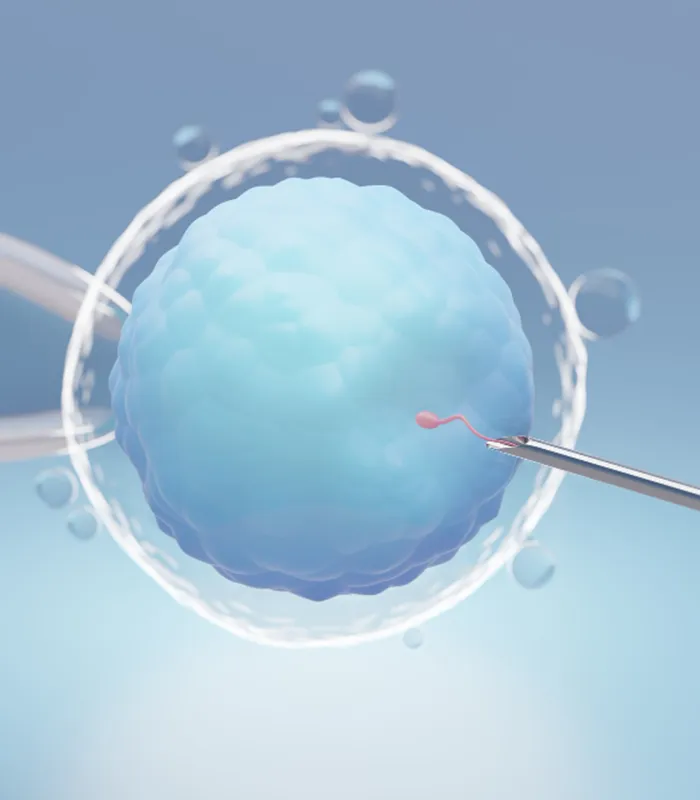
When is ICSI Recommended?
Intracytoplasmic Sperm Injection (ICSI) is a highly advanced technique in assisted reproductive technology, used in cases where traditional IVF may not offer a good chance of fertilization. At Shrushti IVF, we recommend ICSI when specific male infertility issues or previous IVF failures reduce the chances of natural fertilization.
At Shrushti IVF, our fertility specialists assess your unique situation and recommend ICSI only when it provides a clear advantage. With our advanced lab technology and experienced embryology team, we offer the precision and care you need to maximize your chances of success.



High Success Rates
we combine expertise, innovation, and empathy to give every patient the best chance at parenthood

Advanced Fertility Technology
We use the latest fertility technologies and techniques to improve success rates and offer the best possible care.

Personalized Fertility Plans
We design customized fertility treatments tailored to your unique needs for the best possible outcome.

Experienced &
Caring Specialists
Our skilled fertility experts provide compassionate, personalized care at every step of your journey

Affordable & Ethical Care
We offer high-quality fertility treatments with honest pricing and a strong commitment to ethical care

Comfortable &
Private Environment
We provide a calm, private space where you can feel at ease and supported throughout your treatment
FAQ's about IVF
Explore answers to the most common questions about ICSI (Intracytoplasmic Sperm Injection) at Shrushti IVF. Learn when ICSI is recommended, how it differs from IVF, its success rates, safety, and more. Clear, expert-backed guidance to help you make informed fertility decisions.
ICSI is a safe and well-established procedure. Risks are similar to IVF and include: Ovarian hyperstimulation in women taking fertility medications Multiple pregnancy if multiple embryos are transferred Rare risk of infection or bleeding after egg retrieval Our team ensures you are monitored closely to minimize these risks.
Yes. ICSI can be used with donor sperm, especially when the sperm has been frozen or when optimal fertilization results are needed due to previous failures.
For the male partner, sperm collection is usually done through ejaculation or minor surgical retrieval. For the female partner, the procedure is similar to IVF, including egg retrieval under mild anesthesia, so there is no pain during ICSI itself.
If no sperm is found in the semen—a condition called azoospermia—there are still options available. At Shrushti IVF, we offer advanced sperm retrieval procedures like TESA (Testicular Sperm Aspiration) or PESA (Percutaneous Epididymal Sperm Aspiration). These techniques can help obtain viable sperm directly from the testicular or epididymal tissue for use in ICSI.
The number of embryos depends on the number of mature eggs retrieved and successfully fertilized using ICSI. We discuss the embryo development status with you at each stage and help you decide how many embryos to transfer.
Current research suggests that ICSI is generally safe, and most babies born through ICSI are healthy. However, a slightly higher risk of certain genetic or developmental conditions has been noted in rare cases, particularly when sperm abnormalities are due to genetic issues.