




Understanding and Overcoming the Challenges
Repeated IVF Failure
At Shrushti IVF, we understand how heartbreaking and emotionally exhausting repeated IVF failures can be. When your dreams of parenthood are met with disappointment cycle after cycle, it’s time to dig deeper. Repeated IVF failure doesn’t mean the end — it means a different approach is needed, with advanced diagnostics and personalized fertility solutions.
Evaluation of IVF Failure
The first step to overcoming repeated IVF failure is a thorough evaluation. Our fertility specialists conduct an in-depth review of your medical history, previous IVF cycle reports, embryo quality, uterine health, and hormonal levels.
Key areas of evaluation include:
- Uterine abnormalities (fibroids, adhesions, polyps)
- Thin or unreceptive endometrium
- Immune factors
- Male fertility parameters
- Embryo quality and genetic health
Our goal is to uncover hidden factors that may have been overlooked in previous IVF cycles.
Enhanced Evaluation Techniques
Repeated IVF failure often indicates an underlying issue that needs to be identified and addressed. At Shrushti IVF, we begin with a comprehensive fertility evaluation of both partners.
ERA Test (Endometrial Receptivity Analysis)
One of the most critical, yet often missed factors, is uterine receptivity. The ERA test is a cutting-edge diagnostic tool that helps determine the ideal window for embryo implantation.
- It assesses the endometrial lining's readiness to accept an embryo.
- Personalizes the timing of embryo transfer.
- Increases the chances of successful implantation in future IVF attempts
For many patients, adjusting the embryo transfer timing based on the ERA test results has led to successful pregnancies after multiple failed cycles.
PGT-A
(Preimplantation Genetic Testing for Aneuploidy)
Embryo quality is key to a successful pregnancy. Even when embryos appear healthy under the microscope, they may have chromosomal abnormalities that prevent implantation or lead to miscarriage.
PGT-A allows us to:
- Screen embryos for chromosomal abnormalities before transfer.
- Select the most viable and genetically normal embryos.
- Improve implantation rates and reduce the risk of miscarriage.
- Offer better outcomes, especially in women over 35 or with repeated IVF failure.
Laser-Assisted Hatching
Helping the Embryo Implant Better
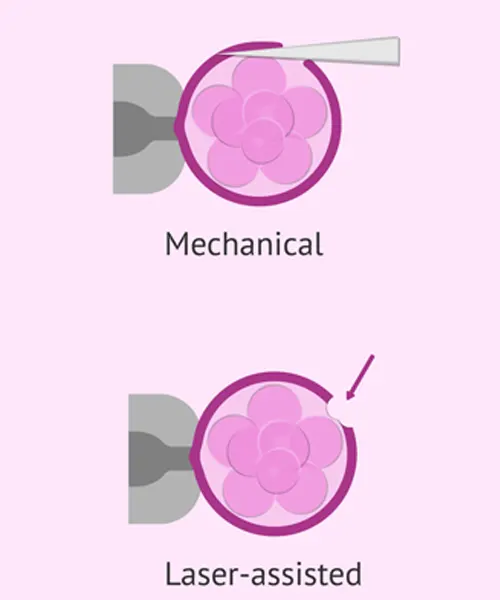
Sometimes, even good-quality embryos struggle to implant due to a thick outer shell (zona pellucida). At Shrushti IVF, we offer Laser-Assisted Hatching, a precision technique that enhances implantation potential.
- A laser is used to gently thin or create a small opening in the embryo’s outer layer.
- This helps the embryo “hatch” and attach to the uterine lining.
- Particularly useful for older women, frozen embryo transfers, and those with previous failed implantations.
Laser-Assisted Hatching is a safe, advanced technique that can significantly improve the chances of embryo implantation, especially after repeated failures.
What Makes Shrushti IVF the Right Choice for You?

High Success Rates
we combine expertise, innovation, and empathy to give every patient the best chance at parenthood

Advanced Fertility Technology
We use the latest fertility technologies and techniques to improve success rates and offer the best possible care.

Personalized Fertility Plans
We design customized fertility treatments tailored to your unique needs for the best possible outcome.

Experienced &
Caring Specialists
Our skilled fertility experts provide compassionate, personalized care at every step of your journey

Affordable & Ethical Care
We offer high-quality fertility treatments with honest pricing and a strong commitment to ethical care

Comfortable &
Private Environment
We provide a calm, private space where you can feel at ease and supported throughout your treatment
FAQ's about Female Infertility
Get answers to the most common questions about female infertility, low AMH, and PCOS/PCOD. At Shrushti IVF, we help you understand your symptoms, diagnosis, and available treatment options with expert guidance. Explore our FAQs to take the next step in your fertility journey with clarity and confidence.
Repeated IVF failure typically refers to two or more unsuccessful IVF cycles where high-quality embryos were transferred but did not result in pregnancy. It may indicate underlying issues that need further investigation.
Several factors can contribute to IVF failure, such as: Poor embryo quality Chromosomal abnormalities (aneuploidy) Thin or unreceptive endometrium Immune system issues Uterine abnormalities Hormonal imbalances Male factor infertility (e.g., sperm DNA fragmentation)
Not at all. Repeated IVF failure simply means a more detailed approach is needed. With proper evaluation and advanced techniques, many couples go on to have successful pregnancies after prior failed attempts.
Yes, at Shrushti IVF, we offer advanced tests and personalized strategies like: ERA Test to identify the best time for embryo transfer PGT-A to select genetically healthy embryos Laser-Assisted Hatching to aid implantation Lifestyle and medical reviews to address hidden issues
Usually, a recovery period of one to two months is advised, but it depends on your physical and emotional health. Your fertility specialist will guide you based on your case.
Preimplantation Genetic Testing for Aneuploidy (PGT-A) screens embryos for chromosomal abnormalities before transfer. It helps select embryos with the best chance of healthy development and reduces the risk of miscarriage or failed implantation.